Wildfire changes the way a property owner should look at trees. A healthy, well-shaped oak that offers shade in spring can also become a ladder of fuel in late summer if lower limbs hang too close to dry grass, or if years of dead interior growth have built up in the crown. A row of ornamental conifers planted tight against a fence may look tidy from the driveway, yet those same trees can move fire straight toward a home when embers start falling. Fire resilience is not about stripping a landscape bare. It is about making smart, deliberate decisions so trees continue to provide beauty, habitat, cooling, and property value without increasing the odds of catastrophic loss.
That distinction matters. People often assume wildfire mitigation means aggressive clearing. In practice, the most effective work usually looks more measured than people expect. Good mitigation balances spacing, species behavior, crown structure, slope, wind exposure, access for crews, and the condition of each tree. It also requires judgment. The right answer for a mature pine on a rural ridge is not the same as the right answer for a maple near a suburban home, and neither should be treated the same way as a neglected eucalyptus grove with decades of litter beneath it.
Fire behavior starts in the landscape, not at the structure
Most homes exposed to wildfire are not ignited by a wall of flame hitting the front porch. They are often ignited by embers. Those embers land in dry mulch, roof valleys, vents, fences, wood piles, and accumulated debris under shrubs or trees. That is why wildfire mitigation tree services focus on more than a single trunk or canopy. The work is about fuel continuity, which is the degree to which fire can move from ground level into shrubs, then into the lower canopy, then across the crowns of adjacent trees.
A mature tree can either slow fire or help carry it. Broadleaf species with higher moisture content and open branching habits often behave very differently from dense resinous conifers. Pruning also changes behavior. When lower limbs are removed appropriately and the canopy is thinned with restraint, heat has a harder time climbing from the surface into the crown. When pruning is done poorly, however, the tree may become stressed, produce weak sprouts, or turn into a maintenance problem within a few seasons.
Experience counts here. The job is not to make every tree look uniformly sculpted. It is to read how fire would likely move through a site. On one property, that may mean removing three small volunteer pines under a mature overstory and lifting limbs over a gravel drive. On another, it may mean a much more substantial combination of Tree Removal Services, Tree Pruning & Crown Shaping, and Stump Removal & Grinding to break up fuel beds and improve access around the house.
What wildfire mitigation tree services actually include
Property owners sometimes call asking for “brush clearing” when what they really need is a broader wildfire mitigation plan. Trees are central to that plan because they influence shade, moisture retention, wind movement, ember trapping, and fire spread. A proper site visit usually begins with a Certified Arborist Consultation, especially on properties with mature or high-value trees. The arborist is not there simply to identify what can be cut. The better role is to distinguish what should be retained, what should be reduced, and what is already creating unacceptable risk.
On a typical residential or light rural property, wildfire mitigation tree services may involve selective removal of dead or declining trees, pruning lower limbs to reduce ladder fuels, thinning dense crowns where species and health allow, removing trees that overhang roofs or outbuildings, grinding stumps that collect debris or interfere with soil treatment, and clearing accumulated litter at the base of trees. Where structural defects are present, Dangerous Tree Assessment and Removal becomes part of the fire conversation too. A fire-prone site is not the place to leave a compromised tree leaning toward an access road or resting over a propane tank.
Emergency work also enters the picture after wind events or storms. Branch failures often leave broken hangers, split leaders, and partially uprooted trees that may not seem urgent in wet weather. Once conditions dry, those same trees become higher-risk ignition points and can obstruct evacuation or firefighting access. That is where Emergency Tree Services overlap with mitigation planning. The emergency may have passed, but the hazard remains.
Pruning for fire resilience is precise work
The phrase “fire pruning” gets used casually, but proper pruning for wildfire resilience is not a rough limbing-up job. It requires species knowledge, an understanding of wound response, and a realistic sense of fire behavior. Removing too much live crown can stress a Tree Cable and Bracing acetree.ca tree, reduce vigor, increase sunscald on previously shaded bark, and trigger a flush of epicormic growth. Those fast, weak shoots often create exactly the kind of low, dense fuel that should have been avoided.
Tree Pruning & Crown Shaping for fire resilience usually aims to create vertical and horizontal separation while preserving tree health. Vertical separation reduces the ability of fire to climb from grasses and shrubs into low branches. Horizontal separation helps keep a crown fire from moving easily from one tree to the next. The exact spacing varies with slope, species, age class, and local fire behavior, which is why blanket rules often disappoint. Trees on a steep slope generally need more separation than trees on level ground because flame lengths and preheating are greater uphill.
Timing matters as well. Heavy pruning just before extreme heat or drought can set a tree back badly. In many cases, it is better to phase the work over more than one season, particularly with mature specimens. I have seen well-intentioned property owners remove a third or more of the live crown from pines in one visit because they were told to “get everything up off the ground.” Two summers later, the trees were thinner, more stressed, and dropping more interior needles than before. The property looked cleaner, but the trees were less resilient.
A better approach usually includes crown cleaning, selective thinning where appropriate, and careful removal of lower limbs to a height that reflects the tree’s size and location. That work should leave the canopy balanced and structurally sound, not lion-tailed or stripped.
Not every tree should stay, and not every tree should go
The hardest conversations are often about removal. Homeowners become attached to trees, especially large ones that define the character of a property. Sometimes that attachment is justified because the tree still provides meaningful benefit and can be managed safely. Sometimes the tree has crossed into liability.
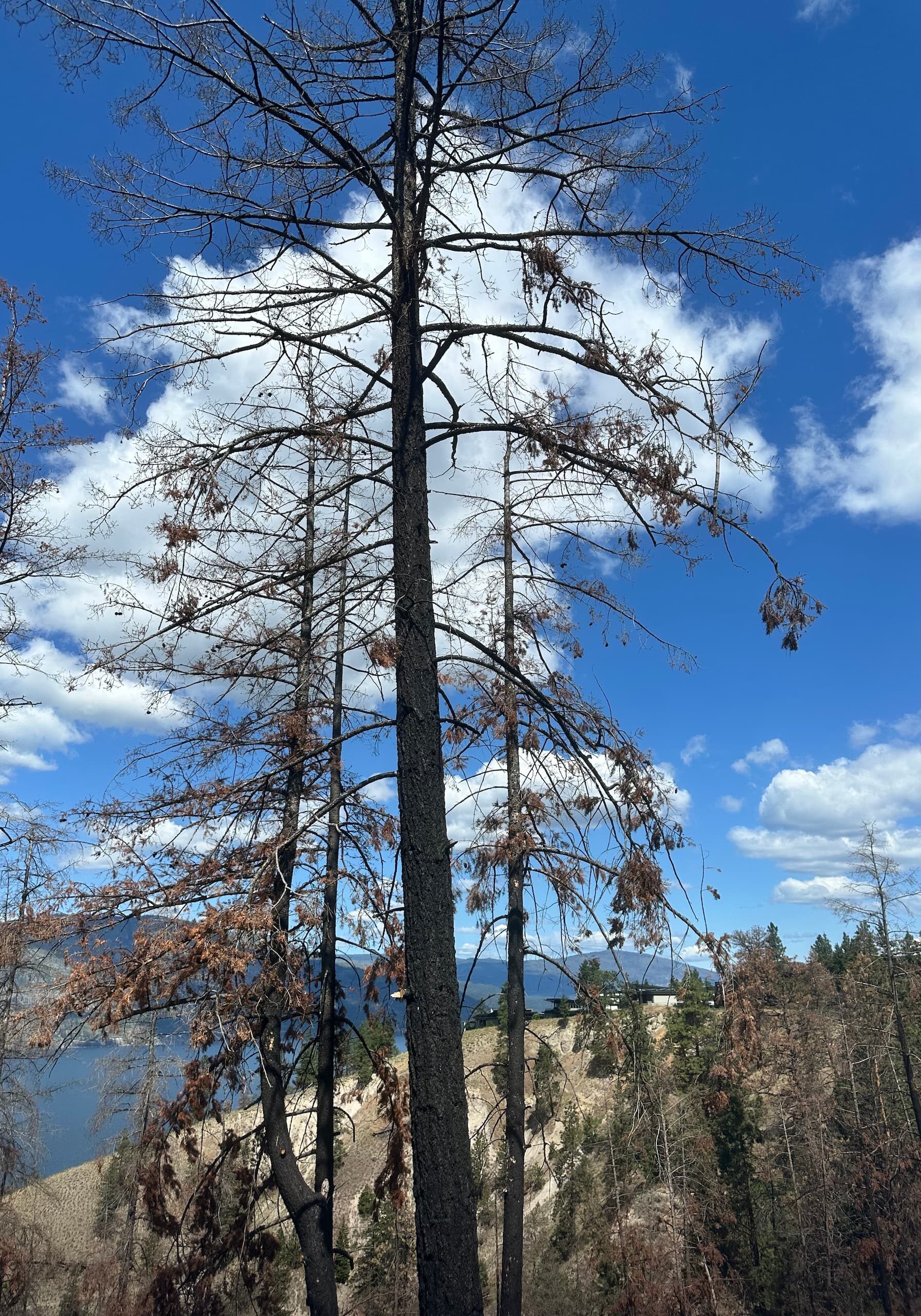
A tree may need removal for wildfire reasons even if it appears alive and green. Common examples include conifers planted too close to the home, multiple stems rubbing tightly with trapped bark and chronic litter buildup, or dense clusters where crowns intermingle and dead material accumulates out of sight. Trees with heavy dieback, fungal decay at the base, unstable root plates, or extensive bark beetle damage can create a double problem. They are both more likely to fail and more likely to contribute volatile fuel.
This is where Dangerous Tree Assessment and Removal deserves emphasis. In fire-prone regions, a structurally unsound tree near a driveway or road does not only threaten the house. It can block evacuation and impede emergency response. I have seen driveways narrowed by leaning stems and low lateral limbs to the point that larger apparatus would struggle to get through. People often think only in terms of what could fall on the roof. Access matters just as much.
When removal is warranted, follow-through matters. A cut stump left proud above grade can become a catch point for leaves, bark flakes, and dry grass. In heavily trafficked mitigation zones, Stump Removal & Grinding can make the area easier to maintain, easier to mow or rake, and less likely to collect debris over time. It also improves the ability to rework planting beds or install more fire-conscious groundcovers and hardscape.
Species, spacing, and the problem of uniform landscapes
Certain plantings age into fire hazards simply because they were designed for privacy or screening without enough room to mature. Rows of tightly spaced junipers, cypress, cedar, or other dense evergreens often become continuous fuel walls. They trap dead interior material, hold heat, and burn intensely once ignited. The same can happen with neglected windbreaks and overplanted property lines.
By contrast, a mixed landscape with sensible spacing often performs better. Deciduous shade trees with separated crowns, maintained understories, and limited debris can slow fire spread and reduce radiant heat near structures. That does not mean every deciduous species is automatically “safe,” nor that all conifers are bad candidates. Mature pines with high canopies, sound structure, and clean spacing can sometimes be retained successfully. The issue is less about labels and more about arrangement and maintenance.
A Certified Arborist Consultation is especially useful when clients want to preserve privacy while reducing fire risk. There are usually options between “leave it untouched” and “clear everything out.” Selective thinning, crown raising, and phased replacement can retain screening while making the planting far less combustible. The key is accepting that fire resilience is not a one-time cut. It is an ongoing management style.
Tree cable and bracing in a fire-prone setting
Tree Cable and Bracing may seem unrelated to wildfire at first glance, but it has a place in some mitigation plans. Large legacy trees near homes sometimes have codominant stems, long lateral limbs over roofs, or structural weaknesses that increase failure risk under wind, snow load, or drought stress. If the tree is otherwise valuable and not positioned as a primary fire hazard, supplemental support may help retain it safely while other mitigation steps are completed.
That said, support systems are not a substitute for pruning, and they are never a reason to keep a tree that should be removed for fire or structural reasons. A badly decayed tree leaning over a structure is not made acceptable by cabling. I mention this because some owners hope to avoid difficult removal decisions by asking for hardware instead. Good arboricultural judgment resists that temptation. Support systems can extend the service life of a worthy tree. They cannot reverse poor species placement, severe instability, or excessive fuel continuity.
The parts of a property people often miss
Wildfire risk often hides in the ordinary places people stop seeing. It is easy to focus on the dramatic trees and overlook the small accumulations that actually carry fire. In inspections, the trouble spots are often mundane: litter packed into a crotch over a roof, volunteer saplings under deck lines, old stumps surrounded by dead weeds, fence lines touching resinous shrubs, and trees arching over sheds full of kindling and fuel.
These are the areas I tell clients to look at first:
The first few feet around the home, including trees that overhang roofs, gutters, and vents. The understory beneath mature trees, especially dead branches, saplings, and dry ornamental grasses. Access routes, where low limbs or leaning stems could block equipment or evacuation. Outbuildings, fences, wood piles, and utility areas that connect vegetation to structures. Slopes and drainages, where fire typically moves faster and pruning standards may need to be more conservative.That kind of review often changes the job scope. A homeowner may think they need a major removal project when careful pruning and cleanup would solve most of the issue. Just as often, they think the site is in good shape until someone points out the continuous fuel path from grass to shrubs to tree canopy to the eaves.
Why over-pruning can backfire
One of the most common mistakes in fire country is overreaction after a bad season. People see a news clip of homes burning and decide to strip everything high and wide. The result is frequently poor tree health, exposed soil, and more maintenance headaches. Open ground fills with flashy annual weeds. Sun reaches the trunks and root zones more intensely. Remaining trees push weak water sprouts. The property may look “defensible” for a few months, but by the next growing season the fuel profile can actually become more troublesome.
Fire resilience depends on moderation. Trees provide cooling and moisture benefits that matter. Shade keeps ground temperatures down and can help reduce the curing rate of surrounding vegetation. Root systems stabilize slopes. Healthy canopies can intercept some embers, though they can also trap them if the canopy is full of dead material. The point is not to erase trees from the property. It is to maintain them in a condition that resists ignition and slows fire spread.
This is one reason Tree Pruning & Crown Shaping should be performed by crews who understand arboriculture, not just saw operation. The quality of the cut, the amount removed, branch selection, and the species response all influence whether the tree becomes safer or more vulnerable.
After the saws leave, maintenance decides whether the work lasts
Wildfire mitigation has a shelf life. A property that was carefully pruned and thinned three years ago can drift back into risky condition if no one maintains it. Fast-growing species refill gaps. Lower sprouts return. Leaf litter builds. Volunteer conifers establish in fence corners and under larger trees. Stumps gather grass and debris. Storm damage creates dead hangers overhead.
That is why I prefer to talk about management cycles rather than one-time projects. Some properties need annual touch-ups. Others can go longer depending on species, irrigation, weather, and owner attention. A well-executed mitigation plan should include realistic maintenance expectations. If a planting design requires constant correction to remain safe, it may be the wrong design.
For many owners, the best results come from combining seasonal inspection with selective service work. That may mean pruning in one cycle, removal and grinding in another, and occasional Emergency Tree Services after wind or snow events. The objective is consistency. Small corrections made regularly are less expensive and less disruptive than major interventions after years of neglect.
What a professional site visit should feel like
A useful arborist or tree service visit should involve more listening than many people expect. The crew or consultant needs to know your priorities. Some clients care most about preserving mature shade trees. Others are preparing for insurance inspection, listing a home for sale, or making a family property easier to evacuate. Some are worried about one obviously failing tree, while the larger issue is actually crown spacing and roof clearance.
The evaluation should account for tree health, structural integrity, species traits, proximity to improvements, slope, prevailing exposure, and local maintenance capacity. If someone proposes heavy cutting without discussing any of those factors, that is a warning sign. If every tree gets the same prescription, that is another.
Here are a few questions worth asking during a consultation:
Which trees are actual fire hazards, and which are simply overdue for maintenance? How much live crown can be removed safely from each species on this site? Which removals improve defensible space the most, relative to cost? Do any trees require Dangerous Tree Assessment and Removal because of structural failure risk? What maintenance interval will keep this property in similar condition over the next few years?Those questions help separate cosmetic work from meaningful risk reduction. They also reveal whether the provider understands the relationship between arboriculture and fire behavior.
The role of emergency tree work after fire or wind
Emergency Tree Services are often associated with storms, but wildfire itself creates urgent tree hazards even where structures survive. Heat can compromise root collars, scorch cambium, split stems, and weaken branch unions in ways that are not always obvious on day one. Trees may remain standing through the event and fail weeks or months later. Post-fire inspections therefore need patience and experience. Some scorched trees recover better than expected, while others decline despite retaining foliage initially.
The same is true after wind events in dry regions. A broken top or partially failed limb may not hit the ground right Tree service away. It hangs, dries, and waits. In a fire-prone landscape, that material becomes both a physical hazard and a fuel problem. Rapid cleanup, followed by a broader reassessment, keeps a manageable issue from becoming a dangerous one.
Fire resilience is built through judgment, not slogans
Every property owner wants a clear formula, but wildfire mitigation rarely works that way. The best outcomes come from informed trade-offs. Keep the tree that shades the west wall and reduce the ladder fuels beneath it. Remove the dense screen pressing against the fence and replant with better spacing. Grind the stumps where debris collects. Retain a valuable mature specimen with pruning and, if appropriate, Tree Cable and Bracing. Call for Emergency Tree Services when weather damage changes the risk profile overnight. Most of all, get a Certified Arborist Consultation when the choices are not obvious.
The goal is not a barren landscape. It is a landscape that gives fire fewer opportunities. Thoughtful Tree Removal Services, disciplined pruning, and ongoing maintenance can make a property safer without stripping away the trees that make it livable. That is what fire resilience looks like in practice, not fear-driven clearing, but skilled, selective work guided by experience and carried forward season after season.
Name: Ace Tree Services Ltd.
Address: 4656 Wallace Hill Rd, Kelowna, BC V1W 4C2, Canada
Phone: 250-212-9593
Website: https://acetree.ca/
Email: [email protected]
Hours:
Sunday: Closed
Monday: 7:00 AM–5:00 PM
Tuesday: 7:00 AM–5:00 PM
Wednesday: 7:00 AM–5:00 PM
Thursday: 7:00 AM–5:00 PM
Friday: 7:00 AM–5:00 PM
Saturday: 7:00 AM–5:00 PM
Time zone: Pacific Time
Open-location code / Plus code: RHF8+8G Kelowna, British Columbia, Canada
Map/listing URL: https://www.google.com/maps/search/?api=1&query=Google&query_place_id=ChIJxRVIBx2LfVMRNRSkp6-IC0U
Embed iframe:
Socials:
https://www.facebook.com/p/Ace-Tree-Services-61585901931447/
Ace Tree Services Ltd. provides professional tree care from its Kelowna location on Wallace Hill Road.
The official website lists tree removal, stump removal and grinding, tree pruning and crown shaping, emergency tree services, certified arborist consultation, dangerous tree assessment and removal, tree cabling and bracing, and wildfire mitigation.
Ace Tree Services serves homeowners, businesses, and property owners in Kelowna and throughout the Okanagan Valley.
The company’s official site highlights ISA Certified Arborist support, local Okanagan experience, and fully insured tree service work.
Customers can contact Ace Tree Services for planned tree maintenance, high-risk removals, storm-related tree concerns, pruning, stump grinding, and arborist consultation needs.
The supplied public listing address is 4656 Wallace Hill Rd, Kelowna, BC V1W 4C2, near rural and residential service areas in southeast Kelowna.
For tree services in Kelowna and the Okanagan, call 250-212-9593, email [email protected], or visit https://acetree.ca/
The public map listing uses plus code RHF8+8G Kelowna, British Columbia, Canada and can help customers find Ace Tree Services Ltd. near Wallace Hill Road.
Popular Questions About Ace Tree Services Ltd.
What does Ace Tree Services Ltd. do?
Ace Tree Services Ltd. provides tree removal, stump removal and grinding, tree pruning and crown shaping, emergency tree service, certified arborist consultation, dangerous tree assessment and removal, tree cabling and bracing, and wildfire mitigation.
Where is Ace Tree Services Ltd. located?
Ace Tree Services Ltd. is listed at 4656 Wallace Hill Rd, Kelowna, BC V1W 4C2, Canada.
What phone number should customers call?
Customers can call Ace Tree Services Ltd. at 250-212-9593.
What is the email address for Ace Tree Services Ltd.?
The supplied email address is [email protected].
What are Ace Tree Services Ltd.’s hours?
The supplied listing hours show Monday through Saturday from 7:00 AM to 5:00 PM, with Sunday closed, Pacific Time. The official website lists 7:00 AM to 5:00 PM, Monday through Friday, so customers should confirm Saturday availability before booking.
Does Ace Tree Services Ltd. provide emergency tree service?
Yes. The official website lists emergency tree services, including emergency tree removal, dangerous tree assessment, emergency stabilization, and limb or branch cleanup.
Does Ace Tree Services Ltd. offer arborist consultations?
Yes. The official services page lists certified arborist consultation as one of the company’s Okanagan tree services.
Does Ace Tree Services Ltd. provide stump grinding?
Yes. The official services page lists stump removal and grinding as a service.
What areas does Ace Tree Services Ltd. serve?
The official website states that Ace Tree Services serves Kelowna and the Okanagan Valley.
How do I contact Ace Tree Services Ltd.?
Call 250-212-9593, email [email protected], visit https://acetree.ca/, or use the listed social profile: Facebook.
Landmarks Near Kelowna, BC
Wallace Hill Road: The road listed for Ace Tree Services Ltd. and a practical reference point for the company’s Kelowna location.
East Kelowna: A nearby rural and residential area where tree maintenance, pruning, removals, and wildfire mitigation can be important for property owners.
Myra-Bellevue Provincial Park: A major outdoor landmark southeast of Kelowna and a useful reference for the surrounding hillside and forested areas.
Gallagher’s Canyon: A nearby Kelowna community with residential properties, mature trees, and landscape maintenance needs.
Kettle Valley: A southeast Kelowna neighborhood with homes, parks, and landscaped properties.
Mission Creek Greenway: A well-known natural corridor in Kelowna and a local reference point for tree-lined recreation areas.
Orchard Park Shopping Centre: A major Kelowna retail landmark and citywide reference point.
Downtown Kelowna: A central business and residential district within Ace Tree Services’ broader Kelowna service area.
Okanagan Lake: A major regional landmark running through Kelowna and the surrounding Okanagan Valley.
Mission Creek Regional Park: A recognizable Kelowna park and natural landmark with extensive trees and trails.
Rutland: A large Kelowna community with residential and commercial properties that may need tree service support.
Glenmore: A Kelowna neighborhood with homes, parks, and established trees.
Lower Mission: A residential and lake-adjacent Kelowna area where pruning, tree health, and property safety can matter for homeowners.
Kelowna International Airport: A major transportation landmark north of central Kelowna.
West Kelowna: A nearby Okanagan community across the lake and a practical regional service reference.
For tree removal, stump grinding, pruning, crown shaping, emergency tree service, arborist consultation, dangerous tree assessment, cabling and bracing, or wildfire mitigation near these Kelowna and Okanagan landmarks, contact Ace Tree Services Ltd. at 250-212-9593, email [email protected], or visit https://acetree.ca/